Why the Siliguri Corridor Is Back in Focus for India’s Security?
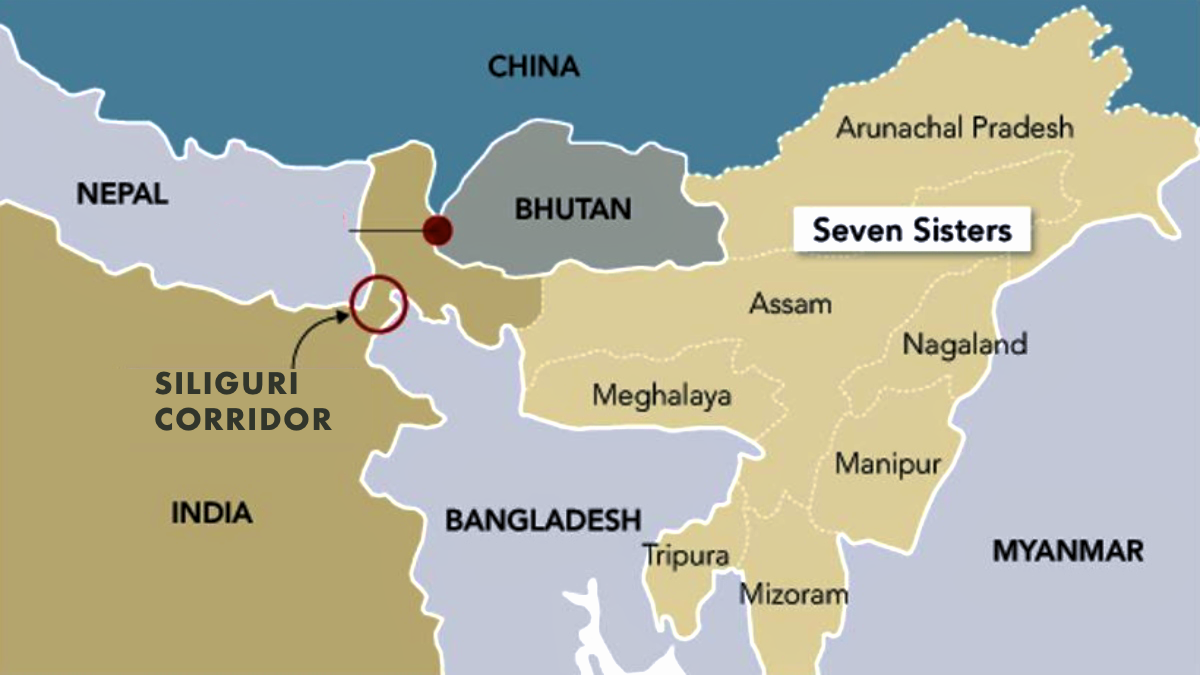
India’s “Chicken’s Neck” — the narrow Siliguri Corridor — is once again in the spotlight. Stretching barely 22 kilometres at its narrowest point, this slender strip connects India’s northeastern states with the rest of the country. Recent reports suggest that India plans to establish three new military garrisons and increase troop deployment in the region. The move follows intelligence indicating that Bangladesh is upgrading its Lalmonirhat airbase, located just across the border. While India calls it a defensive step, the development reflects broader shifts in regional geopolitics.
What Makes the Siliguri Corridor So Critical?
The Siliguri Corridor lies between Nepal to the west and Bangladesh to the east, linking the Indian mainland with its eight northeastern states. It’s not just a strategic lifeline — it’s a vulnerability.
- Any disruption here could cut off the Northeast entirely.
- The corridor also serves as a logistical hub for trade routes to Bhutan and the Indo-Tibetan border.
- Key highways, oil pipelines, and fibre-optic cables pass through this corridor.
For India, protecting this narrow stretch is non-negotiable. That’s why the Indian Army’s 33 Corps headquarters is stationed nearby, with multiple airbases and missile defence assets (including S-400 systems) covering the zone.
What Are Garrisons — and Why Build More?
A garrison is a military facility where troops are permanently stationed. Garrisons often include living quarters, armouries, logistics centres, and operational units. India already has several garrisons near the Siliguri Corridor, but plans are underway to add three more.
Each garrison could hold 1,000–3,000 troops, meaning thousands of additional soldiers will be deployed in the area. These new installations aim to:
- Strengthen rapid-response capabilities in the event of a security threat.
- Support logistics and surveillance operations across the northeast.
- Improve coordination between the Army, Air Force, and paramilitary forces deployed along India’s eastern borders.
According to defence officials cited by The Hindu and Economic Times (October 2025), the move is part of a broader modernisation and deterrence strategy, not a reactionary step.
The Bangladesh Factor: Lalmonirhat Airbase Upgrades
Reports in India Today and Bangladesh Observer suggest that Bangladesh is upgrading its Lalmonirhat airbase, located roughly 80 km from the Siliguri Corridor.
What’s Being Upgraded
- Construction of new hangars capable of housing multiple aircraft.
- Installation of Chinese-made radar systems facing the Indian border.
- Runway reinforcement and air-defence infrastructure improvements.
Bangladesh has described the developments as routine modernisation. Its military spokesperson stated that the upgrades are part of standard defence readiness and not directed at India.
However, Indian intelligence agencies reportedly noted increased activity, including visits by Chinese defence contractors earlier this year. This has prompted closer monitoring from Indian authorities.
India’s Strategic Response
India has opted for a measured but firm response — combining deterrence with diplomacy.
1. Military Reinforcement
The new garrisons and increased troop levels will complement the S-400 missile defence systems and surveillance radars already deployed in the corridor. These installations improve detection, early warning, and interception capability against potential aerial threats.
2. Diplomatic Engagement
India’s Ministry of External Affairs has stated that Bangladesh assured New Delhi the Lalmonirhat base would not be used for military operations against India.
Minister of State for External Affairs Kirti Vardhan Singh told Parliament that India “continues to monitor all developments related to national security and takes necessary measures to safeguard it.”
3. Signalling Through Exercises
India has issued multiple NOTAMs (Notices to Airmen) for large-scale military drills in Sikkim and the Northeast between November 13 to 20, 2025. These exercises demonstrate operational readiness and strategic reach across the Indo-Bangladesh-China tri-junction area.
Regional Implications: Balancing Cooperation and Caution
India and Bangladesh have generally shared strong ties in trade, counter-terrorism, and connectivity. Yet, certain undercurrents have introduced tension:
- Reports of Bangladesh–China defence cooperation (radar systems, naval projects).
- Political sensitivities in Dhaka, especially heightened with changes in leadership and policy alignment.
- Periodic rhetoric in Bangladeshi media or politics about “Greater Bangladesh,” which India views as provocative.
At the same time, India has extended consistent diplomatic support to Bangladesh’s development and security needs. So while this military reinforcement is defensive, it also sends a clear message: India wants peace, but not at the expense of sovereignty or strategic vulnerability.
Expert Views: Both Sides of the Argument
Supporters Say
- Necessary deterrence: Given the corridor’s vulnerability, additional garrisons are overdue.
- Infrastructure boost: Permanent presence allows faster mobilisation and disaster response in the northeast.
- Strategic clarity: A proactive stance discourages adversarial posturing by neighbouring states or external powers.
Critics Argue
- Risk of escalation: Heavy militarisation could be misinterpreted by Bangladesh, straining otherwise positive ties.
- High cost: Building and maintaining new garrisons in difficult terrain involves significant expenditure.
- Diplomatic tightrope: Balancing assertiveness with neighbourhood diplomacy will require careful handling.
The Larger Message
The Siliguri Corridor is not just a geographic chokepoint — it’s a strategic symbol. By fortifying this area, India is ensuring its northeast stays connected and secure, regardless of regional shifts.
The move also underscores a broader shift in India’s security policy: from reactive defence to proactive deterrence. This aligns with India’s ongoing modernisation of its eastern command, expansion of border infrastructure, and renewed focus on countering multi-front threats.
Conclusion
India’s reinforcement of the Siliguri Corridor signals both strength and prudence. It’s about securing vital national interests while maintaining diplomatic balance with neighbours. The message is straightforward: India seeks peace, but it will not compromise on preparedness.
For citizens, the takeaway is clear — vigilance and development must go hand-in-hand. Strengthening the corridor isn’t just about military defence; it’s about ensuring India’s unity, connectivity, and resilience in a changing neighbourhood.
Disclaimer: This article is based on publicly available reports and independent analysis. Readers are encouraged to consult multiple sources for a complete picture.









No comments yet. Be the first to comment!