Putin’s India Visit: What It Means for Defence, Diplomacy, and Global Strategy
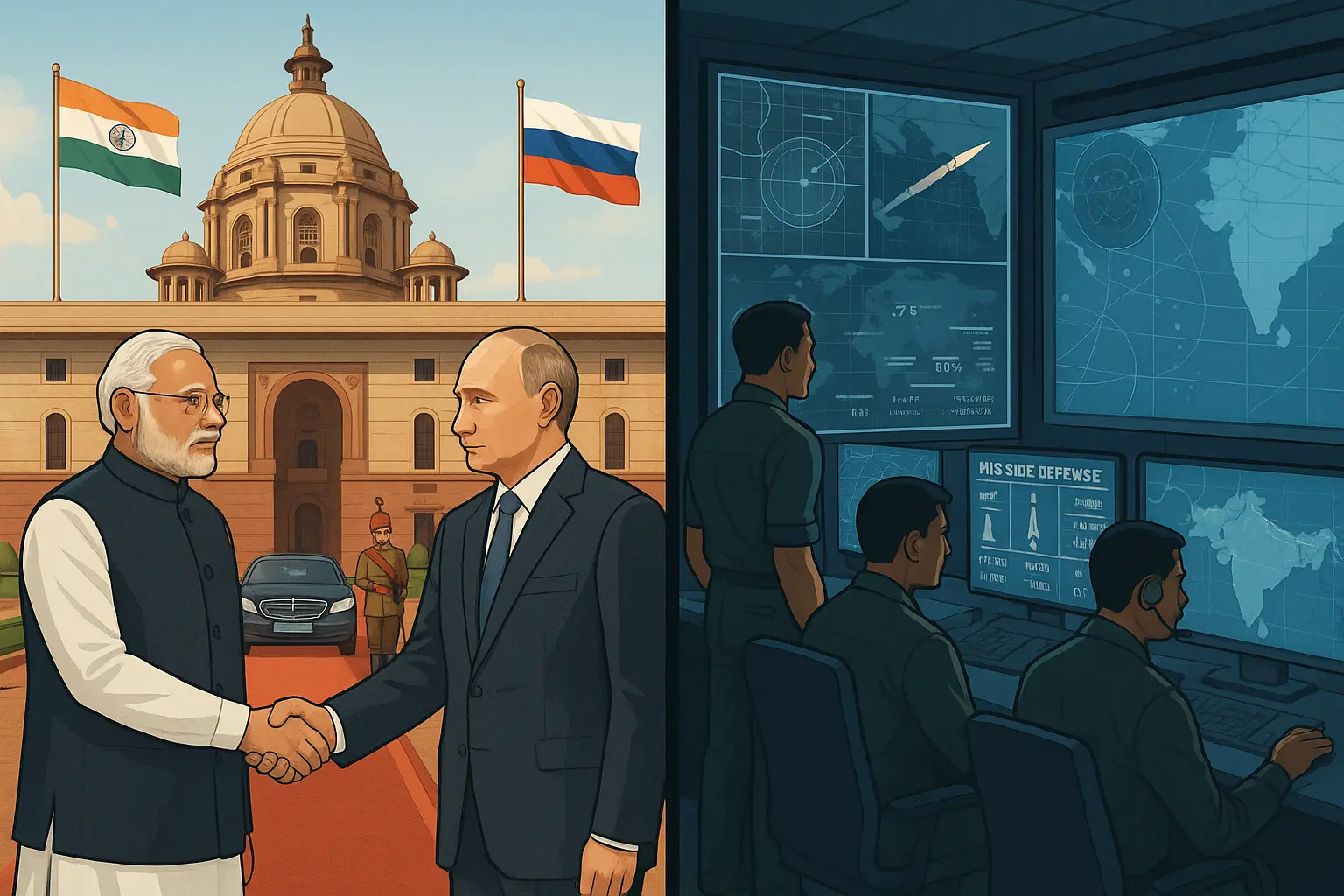
India is set to be at the center of global attention as Russian President Vladimir Putin prepares for a bilateral visit on December 4–5. This is one of his few direct country visits in 2025, making it geopolitically significant. As discussions intensify—from defence technology to energy cooperation—international media, especially in the West, is expected to closely scrutinise India’s choices. The visit comes at a time when major powers are reassessing alignments, sanctions, and global supply chains. For India, the challenge is simple: strengthen strategic autonomy while managing international expectations.
1. Why Putin’s Visit Matters in 2025
Putin has made only a handful of foreign visits this year, most of them to multilateral summits. India is the only major country he is visiting for a standalone bilateral meeting. That alone elevates the political weight of this trip.
For Russia, the priority is clear: maintain strong ties with a major Asian power that continues to serve as a reliable market for its energy exports and defence cooperation. For India, the visit reinforces long-term strategic autonomy—neither fully aligned with the West nor dependent on any single bloc.
2. Arms Deals in Discussion: The S-500 and Beyond
Western media reports have speculated that India may discuss advanced defence systems, including Russia’s S-500 missile defence system, often described as capable of intercepting low-earth orbit satellites under certain conditions.
What the S-500 Can Actually Do
- Russian sources claim the S-500 can hit aircraft, ballistic missiles, and certain low-orbit satellites.
- Western defence analysts argue that its practical anti-satellite capability is limited to satellites at unusually low altitudes (≈200 km).
- Most operational low-earth orbit satellites remain 300–500 km from Earth, beyond the realistic interception ceiling for such a system.
Is India Really Planning to Buy the S-500?
There is no official confirmation. Discussions may include:
- Upgrades to the S-400 system
- Co-production of certain technologies
- Long-term missile defence cooperation
However, the speculation itself shows how closely the global community watches India–Russia defence ties.
3. The Strategic Context: India’s Need for Deterrence
India faces two nuclear-armed neighbours—China and Pakistan. Any capability that credibly deters precision missile attacks or disables hostile surveillance assets strengthens India’s position.
Even the perception that India might access advanced anti-satellite or long-range interception systems can shift strategic calculations in the region. Pakistan, for instance, operates a limited fleet of satellites, some of which are low-capability or dual-use systems. The possibility of enhanced Indian missile defence adds psychological deterrence.
4. India–Russia Trade: The $100 Billion Ambition
Putin has indicated a target: USD 100 billion in bilateral trade by 2030. The pathway is largely driven by energy.
India’s Continued Import of Russian Oil
Despite Western pressure, India remains one of the largest buyers of discounted Russian crude. Available trade data indicates India imported an estimated €2.5 billion worth of Russian oil in October alone, with shipments continuing strongly through November.
The rationale is straightforward:
- Affordable energy stabilises domestic inflation
- Indian refiners gain margins through re-export
- Russia gets a consistent buyer amid sanctions
This interdependence is expected to be central to the visit.
5. The Ukraine Factor and Western Reactions
Western governments, especially the US and EU, remain sensitive to Russia’s bilateral engagements. India has already faced criticism over energy purchases; Putin’s visit could trigger stronger commentary in Western media.
Likely narratives include:
- India is distancing itself from the West
- India is enabling Russia’s war economy
- Concerns about advanced defence sales
However, India has consistently highlighted its position: buying affordable energy is an economic necessity, and India’s partnerships are not zero-sum.
6. The Long-Pending Military Logistics Pact (RELOS)
One of the most anticipated outcomes of Putin’s visit could be progress on RELOS (Reciprocal Exchange of Logistics Support Agreement). India has similar agreements with the US, France, Australia, Japan, South Korea, and others—but not with Russia yet.
What RELOS Would Enable
- Russian naval vessels could access Indian ports for repair and refuelling
- Indian Navy could use Russian bases, including in the Arctic region
- Humanitarian and disaster-response cooperation would improve
Russia’s parliament has already signalled readiness for such cooperation. Signing this pact would diversify India’s military partnerships beyond Western nations.
7. Impact on Indo-US Relations
In recent years, India–US relations have faced intermittent friction—trade issues, visas, technology transfer delays, and political disagreements.
If RELOS moves forward or if India signals deeper defence engagement with Russia, the US may respond with:
- Strong political statements
- Media narratives
- Potential sanctions debate among certain policymakers
However, the US also needs India as a balance in the Indo-Pacific, especially given China’s rise. Both sides understand the importance of maintaining cooperation despite occasional tensions.
8. Why This Visit Will Dominate Global Media
Several factors guarantee massive global coverage:
- Putin’s limited international travel due to geopolitical isolation
- India’s rising global economic and geopolitical influence
- Possible defence and logistics announcements
- Western scepticism over India–Russia proximity
- Broader implications for the global energy market
For the next several days, India will be a major point of discussion in international policy circles.
Putin’s visit represents a critical moment in India’s evolving foreign policy strategy. Balancing partnerships with both Russia and Western nations will continue to be complex, but India’s core objective remains unchanged—maintaining strategic autonomy while securing economic and defence interests. The outcomes of this visit, whether symbolic or substantial, will shape India’s geopolitical posture in the coming decade. The world will be watching closely.
Disclaimer: This article is based on publicly available reports and independent analysis. Readers are encouraged to consult multiple sources for a complete picture.



No comments yet. Be the first to comment!