Japan Cancels US Trade Visit: India’s Defiance Inspires Japan: Is the Deal Falling Apart?
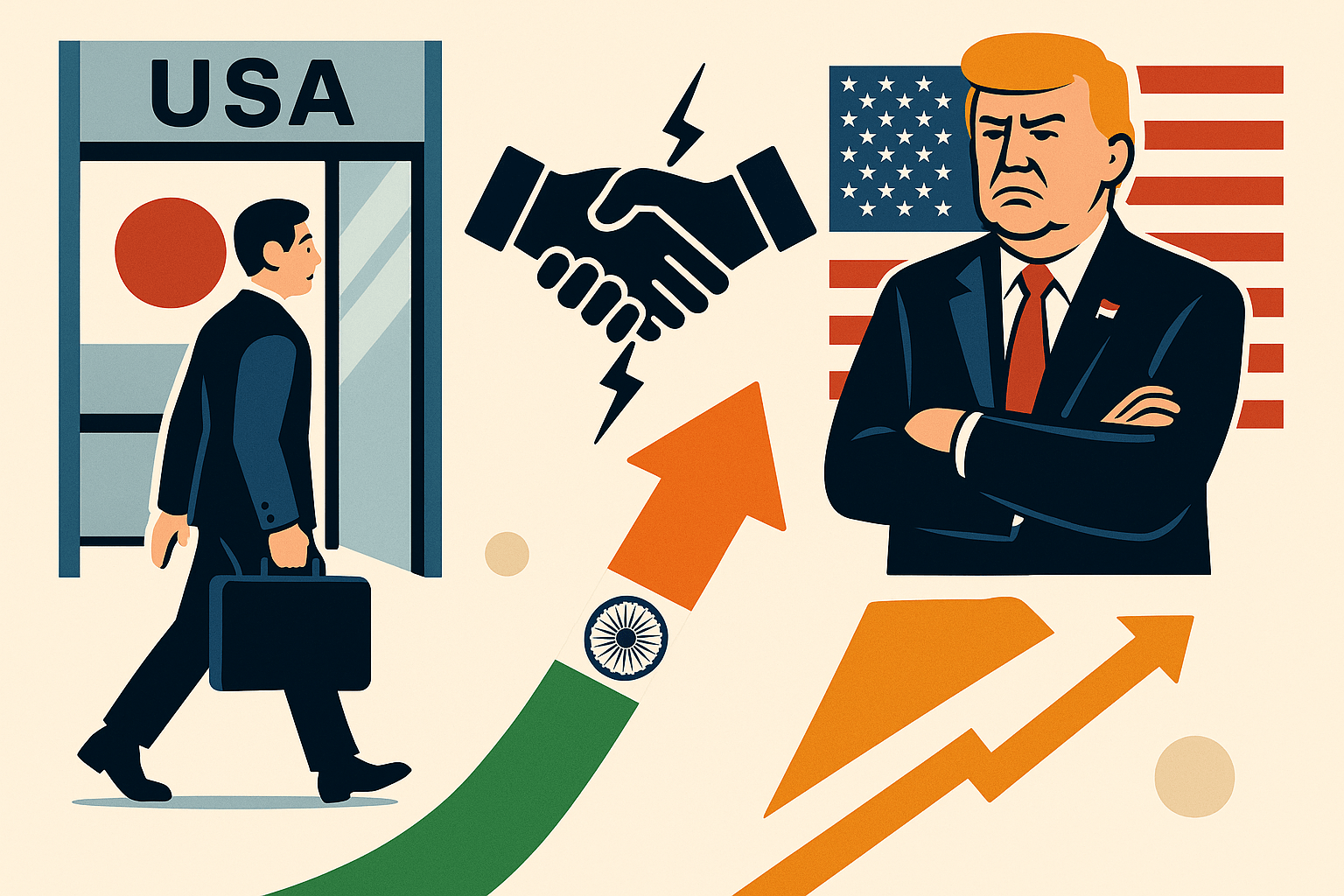
Trade deals are never just about economics—they are about power, pride, and patience. Right now, Japan’s canceled visit to Washington has shaken the US–Japan trade deal, exposing deep cracks. Meanwhile, India has surprised the world by standing its ground against similar pressure. The big question: is this the start of a global shift where nations refuse to bow to Washington’s economic playbook?
Japan Cancels: A Warning Sign
Japan’s top trade negotiator abruptly canceled his visit to the US. Why? Because Washington wasn’t ready to answer a very simple question: When will Trump’s promises in the Japan–US trade deal actually be fulfilled?
This single cancellation is more than a diplomatic hiccup—it’s a message. Japan is signaling frustration. It feels the deal is one-sided, and public opinion in Japan is now asking whether Tokyo was too quick to sign.
India’s Defiance: A Case Study
India has shown the world that standing up to the US is possible. Despite America slapping 50% tariffs on several Indian exports, New Delhi has not rushed to accept unfavorable terms. Prime Minister Modi even encouraged Indians to buy local and support “Make in India” products.
This is powerful. Because if India, with its vast population, still-developing middle class, and modest per-capita income, can hold out—what excuse do richer countries have?
The Trump Playbook: Threats First, Deals Later
Trump’s style of trade negotiations is aggressive. Deals with Vietnam, Taiwan, the EU, and even the UK followed a similar script:
- Begin talks
- Midway, issue threats
- At the last moment, demand extra concessions
Vietnam’s experience was particularly humiliating. Just when Hanoi thought the deal was settled, Trump came back with more demands. The Wall Street Journal even published charts showing how he leveraged threats repeatedly.
This is why countries are waking up. The Japan episode proves that Trump’s strategy may have reached its limits.
The $550 Billion Question
The biggest sticking point in the Japan–US deal is money. The US wants Japan to invest $550 billion into its economy. But Japan isn’t happy:
- It would need to borrow or give government guarantees.
- Even after investing, Japanese goods would still face 15% tariffs.
- Trump claims most profits would flow back to the US.
So, Japan invests billions, pays tariffs, and gets little in return. No wonder people in Japan are asking: What’s the benefit for us?
Ripple Effects: Other Nations Watching Closely
This isn’t just about Japan. Other countries negotiating or having signed trade deals with the US are taking notes.
- Vietnam already feels exploited.
- The EU faces ongoing disputes.
- South Korea and Taiwan got smaller versions of the same treatment.
- Indonesia was forced to buy Boeing jets and US oil just to access markets.
Now, with Japan’s refusal, others may also delay, rethink, or demand better terms.
Can India’s Example Spark a Trend?
India’s decision to wait rather than bend sends a strong message:
- Don’t rush into bad deals.
- Build self-relianc.
- Support local industries.
Japan might now follow India’s strategy. Instead of rushing, it could prioritize domestic brands and exports to alternative markets. If India can resist, so can Japan.
The bigger picture? A slow but sure erosion of US leverage in global trade.
The Road Ahead
Unless Trump modifies his demands, the Japan–US deal may collapse. And if it does, it will strengthen India’s hand even more. Countries across Asia and beyond will see that Washington’s “deal or threat” strategy no longer guarantees compliance.
The next few months will be critical. If Japan holds its ground, a wave of defiance could sweep across global trade negotiations.
Conclusion
The canceled Japan visit is more than a scheduling conflict—it’s a turning point. For too long, the US has used its economic might to corner nations into one-sided deals. But now, India and Japan show that waiting, resisting, and prioritizing self-reliance is a powerful option.
For India, this means doubling down on Make in India. For Japan, it means protecting domestic interests. For the world, it means one lesson: don’t settle for humiliating trade deals. Stronger nations are those that know when to say “no.”





No comments yet. Be the first to comment!