Why India Prefers Russia’s Golden Offer : Su-57 vs. F-35
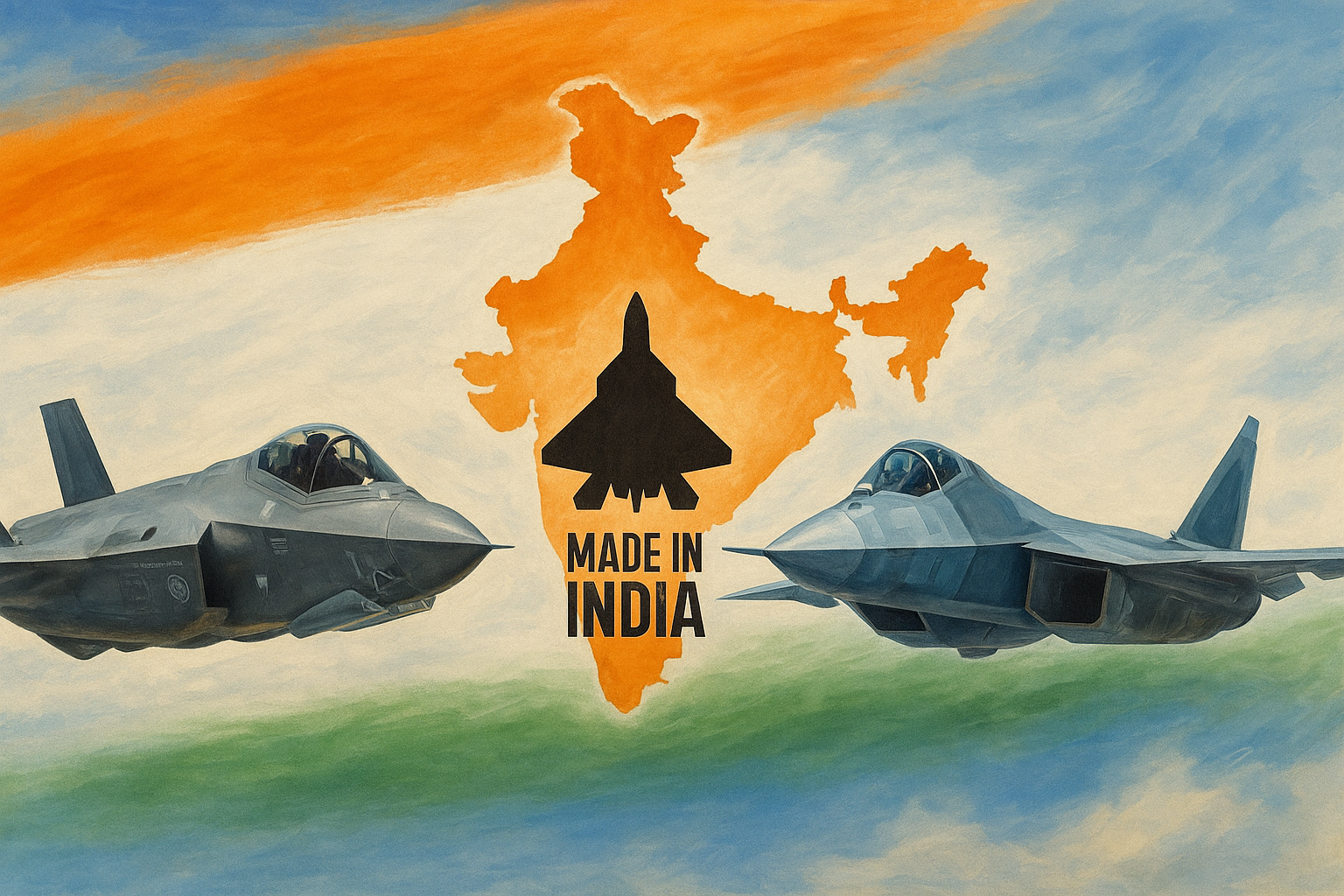
In global politics, defence decisions are rarely about just buying a shiny new jet. It's about trust, independence, and long-term strategy. Recently, India reportedly rejected the United States’ offer of the F-35 Lightning II stealth fighter — a move that has raised eyebrows worldwide. Instead, there’s talk of a promising deal with Russia for its Su-57 stealth fighter. On the surface, it’s about aircraft. In reality, it’s about who India wants to partner with, and how it plans to protect its sovereignty in a turbulent world.
1. The Context: What’s Happening Behind the Scenes
When Prime Minister Modi visited Washington in February 2025, the U.S. — under Donald Trump’s second term — offered India the F-35, its most advanced stealth fighter jet.
For many nations, this would have been a dream deal. But for India, it wasn’t that simple. Defence partnerships are not just about military hardware — they’re about long-term control, operational independence, and trust.
2. Why India Said No to the F-35
a) No Technology Transfer – No Deal
The U.S. strictly controls the F-35 program. Even close allies don’t get access to its source codes or critical electronics. India’s defence strategy is moving towards Atmanirbhar Bharat — building and owning its tech. Buying a jet you can’t modify or upgrade freely is like renting your security system with a landlord who holds the master key.
b) Trust Issues with the U.S.
Recent U.S. actions — like imposing 25% tariffs on Indian exports despite ongoing talks — have made India question America’s reliability as a defence partner. If trade disagreements lead to pressure in defence matters, how safe would India’s sovereignty be?
c) Operational Handcuffs
Integrating the F-35 means tying India’s Air Force into NATO-compatible systems. This could allow Washington to restrict usage during sensitive conflicts — for example, if India wanted to act against China or Pakistan without U.S. approval.
d) High Costs, Low Freedom
At around $80 million per aircraft (plus high maintenance costs), the F-35 is expensive — and still comes with restrictions. India prefers to invest those billions into developing its stealth fighter — the AMCA — while meeting current needs with more flexible deals.
3. Russia’s ‘Golden Deal’: The Su-57 Advantage
Russia has reportedly offered India the modernised Su-57 stealth fighter with:
- Full tech transfer — India gets the blueprints and source codes
- Local production rights — possible assembly at HAL Nashik
- Joint upgrades — co-developing future versions
- Interim supply — until local production ramps up
Su-57 Key Features:
- Stealth design with radar-absorbing materials
- Mach 2 top speed
- ~3,500 km range
- Advanced multi-role radar
- Air-to-air and air-to-ground weapons
- Extreme agility for close combat
4. Strategic Gains for India
- Boost to AMCA development — Su-57 tech could cut India’s stealth fighter timeline in half
- Freedom of operation — no political usage restrictions
- Industrial growth — benefits for HAL, DRDO, BEL, and private defence companies
- Proven partnership — decades of Indo-Russian defence cooperation
5. The Official Stand: No Confirmed Deal Yet
India’s Defence Secretary R.K. Singh has stated:
“No deal is being pursued either with the F-35 or the Su-57 at this time. India is committed to developing and inducting its own AMCA platform.”
The AMCA is expected around 2032–2035. But with fighter squadron numbers falling from 31 to 29 after MiG-21 retirements — and a requirement of 42 squadrons — India needs an urgent plan.
6. Why This Decision Matters Globally
- For India — A clear message that it won’t compromise sovereignty for advanced tech
- For the U.S. — A diplomatic setback in its push to reduce India-Russia defence ties
- For Russia — A chance to deepen strategic ties with India at a time of global isolation
Conclusion
India’s rejection of the F-35 is more than a defence choice — it’s a statement of independence. Whether the Su-57 deal happens or not, the message is clear: India wants to own its skies and the technology behind them. For a nation facing two potential fronts — China and Pakistan — the path ahead is about building strength on our terms. The next few years will decide if India can truly achieve airpower autonomy.



No comments yet. Be the first to comment!